August 24, 2025
|13 phút đọc

Trong mili giây mà một trang web tải xong, một quyết định có tầm ảnh hưởng được đưa ra và có thể xác định danh tiếng của thương hiệu bạn. Khi quảng cáo B2B được bạn chăm chút kỹ lưỡng xuất hiện, nó sẽ đứng tự hào bên cạnh một phân tích ngành nghề đáng tin cậy trên một tờ báo thương mại? Hay nó sẽ hiện ra bên cạnh một video deepfake tinh vi của một CEO đang lan truyền thông tin sai lệch trên thị trường, đúng lúc một khách hàng tiềm năng đang thẩm định công ty bạn? Chỉ một cú nhấp chuột, một placement sai, và một thỏa thuận trị giá hàng triệu đô có thể bị đe dọa trước khi đội ngũ bán hàng của bạn kịp nhận ra chuyện gì đang xảy ra. Đây là thách thức cốt lõi và không thể tránh khỏi của quảng cáo số hiện đại. Trí tuệ nhân tạo (AI) đã trao cho nhà tiếp thị B2B sức mạnh nhắm mục tiêu và tối ưu chiến dịch ở mức chưa từng có. Tuy nhiên, lưỡi kiếm hai lưỡi này cũng mang lại những mối đe dọa phức tạp đối với an toàn thương hiệu của bạn. Việc điều hướng bối cảnh này đòi hỏi nhiều hơn công cụ phòng thủ—nó đòi hỏi một chiến lược chủ động và thông minh để bảo vệ tài sản quý giá nhất của bạn: your brand’s integrity. What you’ll learn in this guide
Not long ago, brand safety was a straightforward concept. Marketers relied on whitelists of trusted websites and keyword blocklists to steer clear of universally unsafe categories like violence, adult content, or hate speech. But this approach had its flaws. A brand might block the word “crash” to avoid negative associations, only to miss out on opportunities to appear alongside stories like “crashing the market with innovative technology.” It was a blunt instrument: manageable, but inefficient. Then came programmatic advertising. The automation of ad buying across millions of websites brought immense efficiency—but at a cost. Marketers lost visibility and control, as trillions of ad auctions now happen daily in a “programmatic black box.” Manual oversight became impossible. This shift from direct placements to algorithm-driven delivery created a new, complex brand safety challenge: protecting brand integrity in an unpredictable and opaque digital ecosystem. 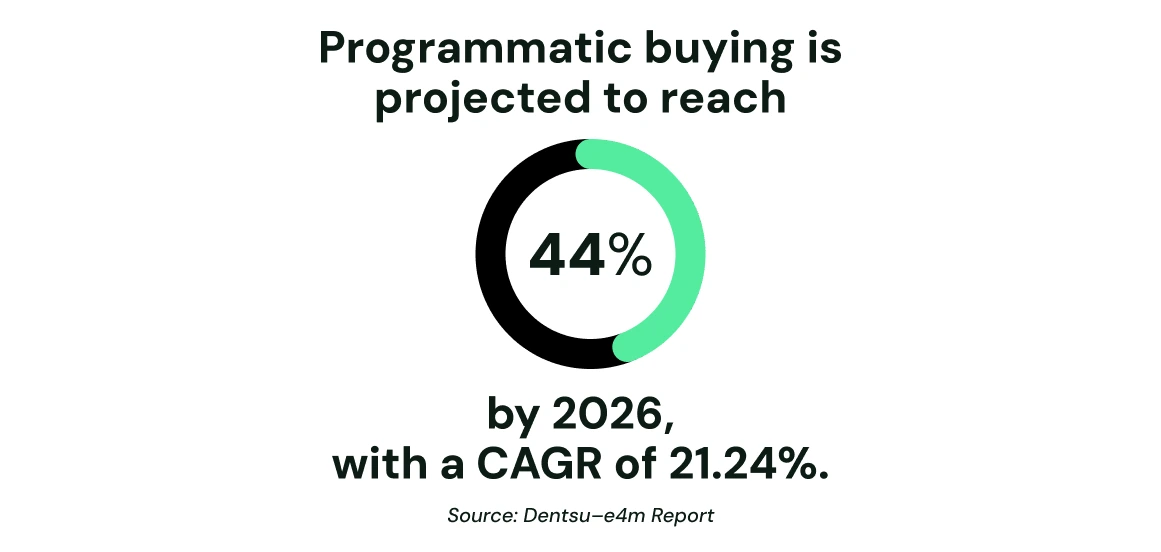 Theo báo cáo của Dentsu-e4m cho thấy chi tiêu quảng cáo số qua chương trình chiếm 42% tổng chi tiêu số trong năm 2024—tăng 21% so với năm trước. Đà tăng này được dự báo tiếp tục, với chương trình số được cho là chiếm 44% thị trường vào năm 2026, tăng trưởng với CAGR 21.24%. Với một phần đáng kể chi tiêu quảng cáo hiện nay được kiểm soát bởi các thuật toán, các thương hiệu ngày càng giao phó quyền kiểm soát về nơi quảng cáo xuất hiện. Trong thực tế này, một phương pháp phản ứng với an toàn thương hiệu không còn đủ. Một mô hình chiến lược, nhận thức AI là thiết yếu để duy trì tính toàn vẹn của thương hiệu trong một hệ sinh thái kỹ thuật số đang phát triển nhanh và tự động hóa.
The modern landscape demands a shift from basic brand safety to strategic brand suitability. For B2B, where reputation and trust are paramount to long sales cycles and high-value deals, this is non-negotiable. It’s no longer enough just to avoid inappropriate content; the goal is to find environments that reinforce expertise and credibility proactively. Using advanced AI to analyze context and sentiment, leaders can ensure their brand appears alongside positive industry analysis, not reports of corporate failure. This transforms brand safety from a defensive cost center into a performance driver, maximizing ROI by ensuring marketing investments build trust with high-value accounts.
For global B2B companies, brand safety impacts investor confidence, partner relationships, and client trust. An ad appearing next to false financial news or polarizing content can jeopardize long-term deals and market perception. Modern brand safety demands AI-powered tools that assess tone, emotion, and values alignment, not just content classification. It requires integration across marketing, legal, and compliance teams to enforce governance at every touchpoint. For enterprise marketers, the question is no longer “How do we avoid bad content?” but “How do we align with the right content, at the right time, in the right context?” In a crowded, volatile media landscape, brand safety is no longer optional. It’s a differentiator—and a prerequisite for trust.
In B2B, where long sales cycles, high-value deals, and deep levels of trust are paramount, reputational damage from a single ad misplacement can have severe, long-lasting financial consequences. This challenge is amplified by a complex digital landscape that now includes social media, Connected TV (CTV), and Digital Out-of-Home (DOOH), with AI becoming an engine for creating new and subtle threats. For marketing leaders, the risk is magnified by modern challenges like misinformation, the scalable creation of synthetic content via generative AI, and rapidly shifting cultural norms. These threats are especially difficult to manage across fragmented teams, multiple agencies, and fast-moving environments. However, the core problem is often internal: a lack of clear, documented accountability for who owns brand safety risks and defines acceptable tolerance levels. Technology and AI filters alone cannot solve this governance gap. Therefore, the recommended strategy is to shift from a rigid, purely technological approach to a dynamic model that blends advanced tools with expert human judgment to navigate nuance and context.
The B2B world is built on expertise and trust. AI-generated content, especially deepfakes, directly attacks this foundation. Imagine a deepfake video of a respected industry analyst making false negative claims about your market, with your company’s ad for a related solution appearing right next to it. That accidental association is instantly damaging and can be screen-captured and shared by competitors. This risk extends beyond video to include AI-generated “expert” blogs that promote flawed data or fake financial reports designed to manipulate market perceptions. The threat is so significant that the United Nations has called for stronger global measures to counter deepfake content before it erodes public and corporate trust (Reuters).
AI algorithms are powerful, but they often lack true human-like contextual understanding. They match keywords, not intent. This leads to jarring placements that can harm your reputation. Consider an advertisement for your cloud security software appearing next to a major news story detailing a catastrophic corporate data breach. While the keywords match, the context makes your brand appear tone-deaf, incompetent, or even predatory, undermining your solution’s credibility at a critical moment.
For a sophisticated business audience, transparency is non-negotiable. B2B buyers are researchers; they can spot a fake from a mile away. If a B2B technology firm used a fully AI-generated video testimonial of a “client” praising its platform, its discovery by tech-savvy buyers would be catastrophic. Accusations of deception would shatter the brand’s authenticity. This damage isn’t just external; it affects employee morale and the ability to recruit top talent who want to work for a company they can trust. In B2B, recovering from a trust deficit is incredibly difficult.
A huge and insidious drain on marketing budgets comes from low-quality MFA sites. These are websites algorithmically generated and filled with stolen or spun junk content, designed for one purpose: to collect ad revenue through programmatic channels. They often use deceptive practices like ad stacking (layering multiple ads on top of each other) and pixel stuffing (cramming ads into a single pixel) to defraud advertisers. A landmark study by the Association of National Advertisers (ANA) found that MFA sites account for a staggering 15% of programmatic ad spend, siphoning billions away from legitimate publishers and impactful campaigns into a “digital black hole.”
 The modern brand safety platforms now offer a multi-layered defense system that operates at the speed of programmatic advertising, vetting ad placements in real time.
This goes far beyond simple keywords. Using Natural Language Processing (NLP), the AI acts like a speed-reader with perfect comprehension. It analyzes the text on a page to understand not just the topic, but also the sentiment (positive, negative, neutral), the tone (e.g., clinical, satirical, angry), and the nuance of the language. Simultaneously, computer vision technology scans images and video frames for unsafe or inappropriate visuals. Together, these tools can tell the difference between a serious news report on a corporate crisis and a satirical article in a business magazine, ensuring your ads are placed in genuinely suitable environments (Supermetrics).
The most effective AI tools work proactively in milliseconds before the ad is even bought. This is known as pre-bid analysis. Before your ad platform places a bid on an available ad slot, the safety AI analyzes the page content, scores it against your brand’s specific safety and suitability rules, and blocks the bid entirely if the environment poses a risk. This prevents your ad from ever appearing in the wrong place.
Beyond content, AI is crucial for sniffing out ad fraud. It is trained to recognize the difference between human and non-human behavior. It can identify patterns indicative of botnets, click fraud (bots generating fake clicks), impression fraud (fake views), and domain spoofing (when a low-quality site masquerades as a premium one). This ensures your budget reaches real business audiences, not criminal operations.
Despite its power, treating AI as a “set it and forget it” solution is a recipe for failure. The technology has blind spots and inherent limitations that demand strategic management.
Given AI’s limitations, human oversight isn’t a legacy function—it’s an essential strategic component. The smartest brands build a brand safety “Center of Excellence” where human experts guide the technology. This “human-in-the-loop” approach is critical for success. This team typically includes an Ad Ops specialist, a data analyst, a brand strategist, and a policy expert. These human strategists provide the contextual judgment, ethical reasoning, and industry expertise that AI lacks. Their job isn’t to review every placement, but to manage the system. A strong human review process involves:
The pinnacle of brand protection moves beyond simply avoiding bad content to proactively seeking the perfect environment. This is the crucial evolution from brand safety tobrand suitability. Where brand safety sets the floor (the absolute minimum standard of what to avoid), brand suitability designs the entire house (defining the ideal tone, context, and environment for your brand). This tailored approach aligns ad placements with your specific values and messaging. For a cybersecurity firm, a neutral article on data privacy might be “safe,” but an in-depth analysis of emerging enterprise security threats is “suitable”—and far more valuable for reaching the ideal customer mindset (Seekr). Developing a suitability framework is a strategic exercise that involves three key steps:
The landscape is constantly evolving, driven by three key forces:
Artificial Intelligence offers immense opportunities for B2B marketers, enabling a level of precision and scale that was once unimaginable. But it also creates profound risks to the currency that matters most in business:trust and reputation. Success lies not in choosing between innovation and responsibility, but in skillfully balancing them. The future of advertising belongs to those who learn to lead the technology, not just follow it. By combining the power of sophisticated AI tools with the wisdom of human oversight—and by elevating your goal from mere safety to holistic brand suitability—you can navigate this new frontier with confidence. This approach will not only safeguard your brand’s hard-won reputation but will also build a more resilient, authentic, and profitable connection with your clients.


Nhận các báo cáo và thông tin chi tiết mới từ KKBC qua email.
 VN


 VN
